Describe what responds
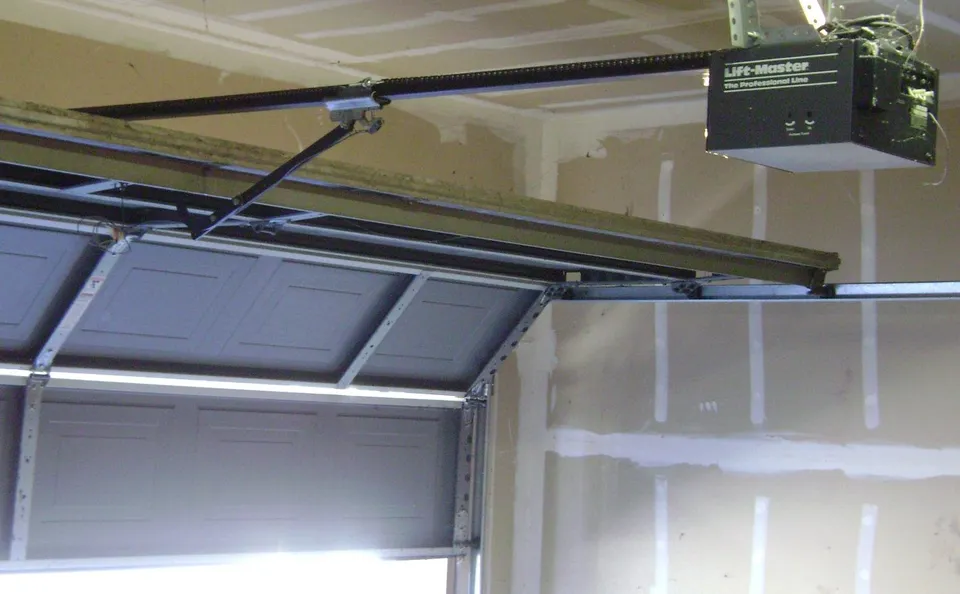
A silent motor, flashing light, running motor or reversing door gives a technician different starting information. Say whether the wall control and remote respond differently. Read a model label only if it is visible without climbing or handling the equipment. Those details help plan an assessment; they do not diagnose the fault.
Keep safety functions intact
A door that binds can put extra demand on the operator. A control fault and a mechanical door fault may exist together. Do not bypass photoelectric sensors, defeat a safety device or increase force to make the door close. CPSC identifies safety requirements for automatic residential garage-door operators; a connected opener still needs its safety protections.
Choose replacement for the actual opening
Ask about door suitability, rail clearance, mounting, the existing power supply and compatible controls. A replacement proposal should say whether the rail, wall control, remotes, safety sensors, setup and disposal are included. Storage above the door and ceiling-mounted lights can affect the fit. Electrical changes may need separate work.
Use a practical comparison
In Charlotte homes where the garage is a daily entrance, noise and access after a power interruption may matter. Compare those features with the condition of the door and available replacement parts. Confirm address eligibility, diagnostic charges and appointment options before agreeing to a visit. Avoid choosing equipment from horsepower or connectivity alone.
Questions to bring to the assessment
- Is the door suitable for the proposed operator?
- What equipment and setup are included?
- Are electrical changes separate?